Heavy Work, Proprioception, and Relational Regulation: Why Grappling and Somatic Drawing Integrate Mind and Body – by Melissa Wyman
Abstract
Heavy work, aka physical activity involving deep pressure and resistance that engages the proprioceptive system, is increasingly recognized as supportive of nervous system regulation across somatic psychotherapy, occupational therapy, and neurodiversity-affirming practice. Drawing from Sensorimotor Psychotherapy and Polyvagal Theory, this article examines Brazilian Jiu Jitsu (BJJ) and somatic drawing, more specifically a relational playful practice called Collaborative Combative Drawing, as distinct practices that share a common therapeutic architecture grounded in proprioception, intentional action, relational engagement, and play.
Through a Sensorimotor Psychotherapy lens, these practices function as bottom-up interventions that engage regulatory capacities encoded in movement, sensation, and action. Grappling and somatic drawing support the modulation and completion of defensive and relational action tendencies within structured, consent-based contexts, promoting agency, boundary clarity, and autonomic flexibility. Polyvagal Theory further situates play as a key mechanism, providing a neurobiological context of safety that allows exploration of intensity, proximity, and mutual influence without overwhelm.
Positioned within a neurodiversity-affirming framework, the article highlights the relevance of these embodied approaches for autistic, ADHD, otherwise neurodivergent and/or highly sensitive people for whom traditional talk therapy may be insufficient. By prioritizing embodied experience and honoring diverse nervous system organizations, heavy work and somatic drawing offer inclusive, relational pathways to regulation and integration.
Forward: Considerations – Bodies, Boundaries, and Facilitation
Embodied practices that involve heavy work, relational contact, or shared space must be approached with careful attention to diverse bodies, abilities, nervous systems, and histories. There is no single way to experience safety, regulation, or play, and what is grounding for one person may be overwhelming or inaccessible for another. Considerations such as body size, strength, mobility, chronic pain, sensory sensitivities, trauma history, and cultural meanings of touch and proximity are central to ethical facilitation.
Comfort with physical closeness and interpersonal impact varies widely. For some individuals, grappling or collaborative movement may feel regulating and connective; for others, proximity, touch, or shared surfaces may activate threat responses or memories of boundary violation. A Sensorimotor Psychotherapy approach emphasizes choice, pacing, and titration, allowing participants to opt in or out, adjust intensity, and engage from positions of observation or parallel participation when needed. Somatic drawing and Collaborative Combative Drawing can be adapted to include distance, altered tools, asymmetrical engagement, or non-contact participation while still preserving the core elements of agency, proprioceptive input, and relational negotiation.
Neurodiversity-affirming practice further requires honoring different sensory profiles and energy capacities. Some participants may benefit from brief, high-intensity engagement followed by rest, while others may prefer sustained, rhythmic activity. Clear structure, predictable boundaries, and explicit consent processes support nervous-system safety across a wide range of needs. Importantly, regulation is not measured by visible calm or compliance, but by increased access to choice, self-knowledge, and authentic engagement.
It is also essential to name facilitator positionality. I practice and teach Brazilian Jiu Jitsu and trauma-informed self defense, and have an ongoing personal relationship with somatic and collaborative art practices. These are forms I inhabit in my own body and nervous system, not techniques I apply from a distance. This embodied familiarity allows me to recognize subtle shifts in arousal, boundary negotiation, and relational dynamics, and to facilitate with safety, consent, and nervous-system literacy at the forefront. At the same time, this comfort underscores the responsibility to avoid assuming universality. Practices that are regulating for me may not be so for others, and ethical facilitation requires ongoing attunement, humility, and responsiveness.
Ultimately, the aim of these practices is not to invite participants into a particular form or intensity of engagement, but to support self-directed regulation, agency, and relational choice. When offered with flexibility and respect for difference, heavy work and somatic drawing can remain inclusive, adaptive, and supportive of many ways of being in a body—together or apart.
Introduction
Across somatic psychotherapy, occupational therapy, and neurodiversity-affirming clinical practice, heavy work has emerged as a powerful pathway to nervous-system regulation (Ayres, 1972; Dunn, 2007). Activities involving pushing, pulling, sustained resistance, and full-body engagement often help people feel grounded, present, and emotionally organized. From a Sensorimotor Psychotherapy perspective, this is not incidental. Heavy work directly engages the sensory–motor systems through which trauma histories, attachment strategies, and regulatory capacities are encoded (Ogden, Minton, & Pain, 2006). When paired with intentional action and relational attunement, these practices support integration at the level where experience is actually organized: in movement, sensation, and action.
This article explores how practices such as Brazilian Jiu Jitsu (BJJ) and somatic drawing ( specifically Collaborative Combative Drawing) can support important therapeutic benefits. Each integrates deep proprioceptive input, bilateral and midline-crossing movement, and regulated relational contact. When informed by Polyvagal Theory, these practices also highlight the central role of play in expanding capacity for connection, flexibility, and safety (Porges, 2011; Dana, 2018).
A Sensorimotor Psychotherapy Lens
Sensorimotor Psychotherapy understands symptoms as adaptive responses shaped by the nervous system in the context of threat, attachment disruption, and unmet relational needs (Ogden & Fisher, 2015). Rather than prioritizing narrative recall or cognitive insight, this approach values attending to posture, movement patterns, impulses, and somatic experience in the present moment. Change occurs when the body is supported to complete defensive or relational actions that were once constrained, and when new experiences of agency and regulation are embodied rather than merely understood.
Heavy work aligns naturally with this framework. Sustained resistance and effort generate clear proprioceptive feedback, enhancing the nervous system’s sense of position, force, and movement (Ayres, 1972). This clarity supports organization of arousal and attention, reduces diffuse threat responses, and increases capacity for choice (Ogden et al., 2006). Importantly, heavy work also invites intentional action, such as pushing, yielding, holding, releasing, allowing individuals to experience themselves as active participants in regulating their internal state.
It is important to note however, in this article, we are focusing on the bottom up somatic part of the healing and integration process. In Sensorimotor Psychotherapy, bottom-up processing is essential for addressing how trauma is held in the body, but top-down narrative is also crucial for integration and healing. Cognitive meaning-making helps organize sensory and emotional experiences into coherent memory, linking implicit and explicit systems so trauma can be remembered rather than relived. Narrative restores agency, reduces shame by contextualizing survival responses, and supports a continuous sense of self over time. Rather than overriding the body, reflective cognition collaborates with somatic awareness to strengthen regulation, dual awareness, and relational connection, allowing bodily healing to be understood, integrated, and sustained. (Ogden et al., 2006; Siegel, 2012)
Proprioception as a Foundation for Regulation
Proprioception provides continuous information about the body’s relationship to gravity, space, and force. For many individuals, particularly those with trauma histories or neurodivergent nervous systems, this system may be inconsistently accessible or under-integrated (Kranowitz, 2005; Schaaf & Mailloux, 2015). When proprioceptive input is limited, the nervous system may default to hypervigilance, dissociation, or cognitive overcontrol in an attempt to maintain safety.
Heavy work reliably increases proprioceptive signaling through muscles and joints, offering the nervous system a strong, organizing input (Dunn, 2007). From a Sensorimotor Psychotherapy perspective, this input supports present-moment orientation, boundaries, and a felt sense of containment. Regulation emerges not through suppression of arousal, but through increased coherence across sensory, motor, and affective systems (Fogel, 2009).
Grappling as Regulated Relational Action
Brazilian Jiu Jitsu offers a particularly rich example of heavy work embedded within relationship. Grappling involves pushing, pulling, holding, yielding, and responding to another person’s movement in real time. Unlike many forms of exercise, BJJ requires constant negotiation of pressure, proximity, timing, and consent. These elements make it a powerful laboratory for renegotiating attachment and defensive patterns through action rather than analysis (Schore, 2012).
From a Sensorimotor Psychotherapy perspective, grappling allows for the completion and modulation of survival responses (mobilization, immobilization, approach, and withdrawal) within a structured and bounded context (Ogden & Fisher, 2015). The nervous system learns that intensity does not necessarily equal danger, and that pressure can coexist with safety. Over time, practitioners often develop increased tolerance for closeness, clearer signaling of boundaries, and greater confidence in their capacity to respond effectively.
Somatic Drawing and Action-Based Expression
Somatic drawing similarly engages heavy work and proprioception, though through a different medium. Using the whole arm, crossing the midline, applying pressure to paper, and following movement impulses invites sensory–motor integration without requiring verbal articulation (Hinz, 2009). Drawing becomes an action rather than a representation—an opportunity to track effort, resistance, rhythm, and choice.
From a Sensorimotor Psychotherapy lens, somatic drawing supports awareness of impulses and the capacity to modulate them. Clients may notice when movement becomes constrained, rushed, tentative, or forceful, and experiment with altering these patterns in real time. This mirrors therapeutic work with posture and gesture, allowing new somatic experiences of agency and flexibility to emerge (Ogden et al., 2006).
Collaborative Combative Drawing and Relational Regulation
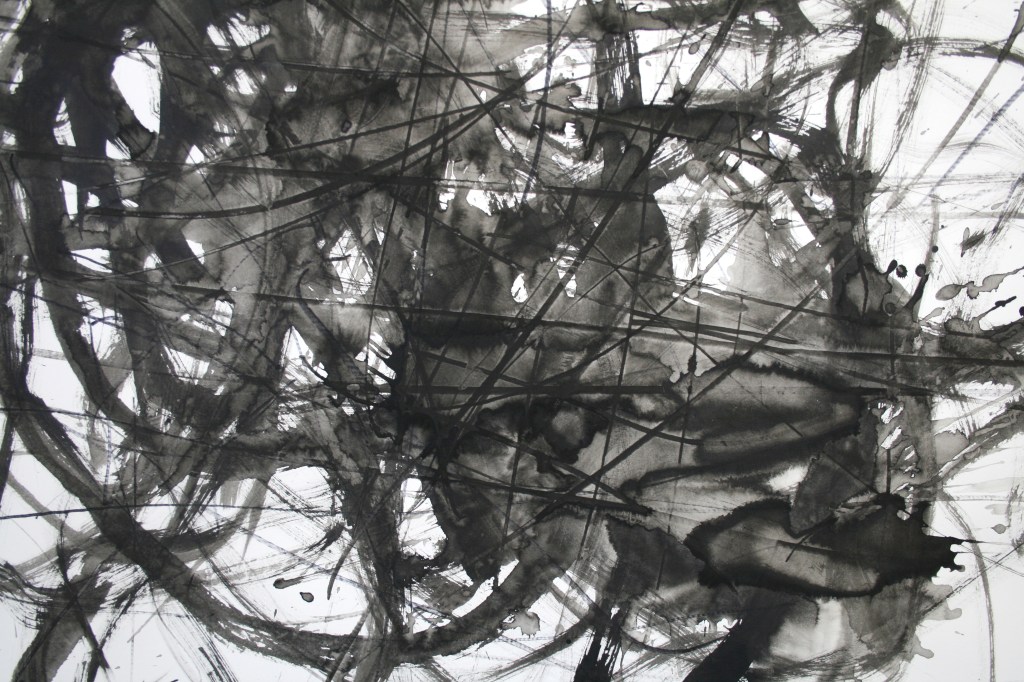
Collaborative Combative Drawing extends somatic drawing into a shared, relational field. Two or more participants draw simultaneously on the same surface, negotiating space, pressure, direction, and tempo. The interaction is intentionally structured to include both cooperation and tension, inviting participants to stay present with impact while remaining connected.
From a Sensorimotor Psychotherapy perspective, this practice engages relational action tendencies (assertion, yielding, attunement, rupture, and repair) through embodied play (Schore, 2012). Participants experience themselves influencing and being influenced while maintaining choice and boundaries, supporting the nervous system in expanding capacity for relational engagement without overwhelm or collapse.
The Role of Play: A Polyvagal Perspective
Polyvagal Theory emphasizes the role of the ventral vagal system in supporting social engagement, safety, and co-regulation (Porges, 2011). Play is a primary pathway through which this system develops and remains accessible across the lifespan (Dana, 2018). Play introduces variability, novelty, and mutual responsiveness which signal safety while allowing exploration of intensity.
Both grappling and somatic drawing function as forms of adult play when appropriately framed. They include clear boundaries, predictable structure, and room for improvisation. From a polyvagal-informed perspective, play allows the nervous system to practice moving between states of arousal without becoming stuck in defense, supporting flexibility rather than collapse or rigidity.
Neurodiversity-Affirming Applications: Autism, ADHD, and HSP
From a neurodiversity-affirming perspective, autism, ADHD, and high sensitivity represent natural variations in nervous system organization rather than deficits to be corrected (Kapp, 2020). Many autistic, ADHD, and highly sensitive individuals experience heightened sensory input, fluctuating interoception, and differences in proprioceptive processing that can make traditional talk therapy insufficient or overwhelming.
Heavy work, grappling, and somatic drawing offer regulatory pathways that do not require masking, verbal fluency, or cognitive reframing. Proprioceptive input supports grounding and predictability, while structured relational engagement allows for connection without excessive social demand (Schaaf & Mailloux, 2015). Importantly, play-based embodied practices allow individuals to explore intensity, boundaries, and agency on their own terms, supporting self-trust and nervous-system literacy rather than compliance.
For many neurodivergent individuals, these practices provide experiences of competence, choice, and mutual regulation that are often unavailable in environments that prioritize verbal processing or behavioral normalization. From this lens, regulation is not about becoming calmer or more typical, but about increasing access to states of safety, engagement, and authenticity.
Expanding the Window of Tolerance Through Embodied Play
When heavy work and somatic expression are paired with play, they support gradual expansion of the window of tolerance (Siegel, 1999). The nervous system learns to remain present with increased sensation, emotion, and relational contact without tipping into hyperarousal or shutdown. From a Sensorimotor Psychotherapy perspective, this expansion occurs through repeated experiences of successful action: feeling activation rise, making choices, and returning to regulation (Ogden & Fisher, 2015).
Grappling and collaborative drawing offer ongoing opportunities to titrate intensity, pause, renegotiate, and repair. These micro-adjustments build confidence in the nervous system’s capacity for flexibility and resilience, extending beyond the therapeutic or practice space into daily life.
Conclusion
Heavy work, grappling, and somatic drawing are not universally regulating practices, nor are they intended to be. From a Sensorimotor Psychotherapy perspective, their therapeutic value lies not in the specific forms themselves, but in the principles they embody: intentional action, meaningful proprioceptive input, relational choice, and the capacity to modulate intensity within clear and consensual boundaries. When these principles are honored, embodied practices can support nervous-system integration through lived experience rather than verbal explanation.
Importantly, nervous systems vary, as do bodies, abilities, sensory profiles, and histories of touch and proximity. Practices involving pressure, resistance, or shared space must therefore be offered with flexibility, transparency, and respect for difference. Regulation is not defined by visible calm or endurance, but by increased access to agency, choice, and self-trust. For some individuals, engagement may involve full physical contact; for others, it may take the form of parallel movement, altered tools, greater distance, or observation. All of these pathways can support integration when they are chosen rather than imposed.
These practices also require thoughtful facilitation. My own sustained engagement with Brazilian Jiu Jitsu and somatic, collaborative art forms allows me to facilitate from embodied familiarity rather than abstraction, attuning to shifts in arousal, boundary negotiation, and relational dynamics as they unfold. At the same time, this positionality demands ongoing humility and reflexivity, recognizing that what is regulating for one nervous system may not be for another. Safety emerges not from technique alone, but from attunement, consent, and responsiveness in relationship.
Ultimately, grappling and somatic drawing invite a reorientation of psychotherapy toward the body as an intelligent, relational partner in healing. When offered in ways that honor neurodiversity, bodily difference, and autonomy, these practices can expand the window of tolerance, support relational regulation, and cultivate resilience through play and purposeful action. They remind us that integration is not something we explain to the nervous system, but something we practice—again and again—through movement, connection, and choice.
References
Ayres, A. J. (1972). Sensory Integration and Learning Disorders. Los Angeles, CA: Western Psychological Services.
Dana, D. (2018). The Polyvagal Theory in Therapy: Engaging the Rhythm of Regulation. New York, NY: W. W. Norton & Company.
Dunn, W. (2007). Supporting children to participate successfully in everyday life by using sensory processing knowledge. Infants & Young Children, 20(2), 84–101. https://doi.org/10.1097/01.IYC.0000264479.05076.5d
Fogel, A. (2009). Body Sense: The Science and Practice of Embodied Self-Awareness. New York, NY: W. W. Norton & Company.
Hinz, L. D. (2009). Expressive Therapies Continuum: A Framework for Using Art in Therapy. New York, NY: Routledge.
Kapp, S. K. (Ed.). (2020). Autistic Community and the Neurodiversity Movement: Stories from the Frontline. Cham, Switzerland: Palgrave Macmillan.
Kranowitz, C. S. (2005). The Out-of-Sync Child: Recognizing and Coping with Sensory Processing Disorder. New York, NY: Perigee.
Ogden, P., Minton, K., & Pain, C. (2006). Trauma and the Body: A Sensorimotor Approach to Psychotherapy. New York, NY: W. W. Norton & Company.
Ogden, P., & Fisher, J. (2015). Sensorimotor Psychotherapy: Interventions for Trauma and Attachment. New York, NY: W. W. Norton & Company.
Porges, S. W. (2011). The Polyvagal Theory: Neurophysiological Foundations of Emotions, Attachment, Communication, and Self-Regulation. New York, NY: W. W. Norton & Company.
Schaaf, R. C., & Mailloux, Z. (2015). Clinician’s guide for implementing Ayres Sensory Integration®: Promoting participation for children with autism. American Journal of Occupational Therapy, 69(5), 6905180010p1–6905180010p8. https://doi.org/10.5014/ajot.2015.019000
Schore, A. N. (2012). The Science of the Art of Psychotherapy. New York, NY: W. W. Norton & Company.
Siegel, D. J. (2012). The developing mind: How relationships and the brain interact to shape who we are (2nd ed.). New York, NY: Guilford Press.
van der Kolk, B. A. (2014). The Body Keeps the Score: Brain, Mind, and Body in the Healing of Trauma. New York, NY: Viking.

 melissa Wyman Therapy